
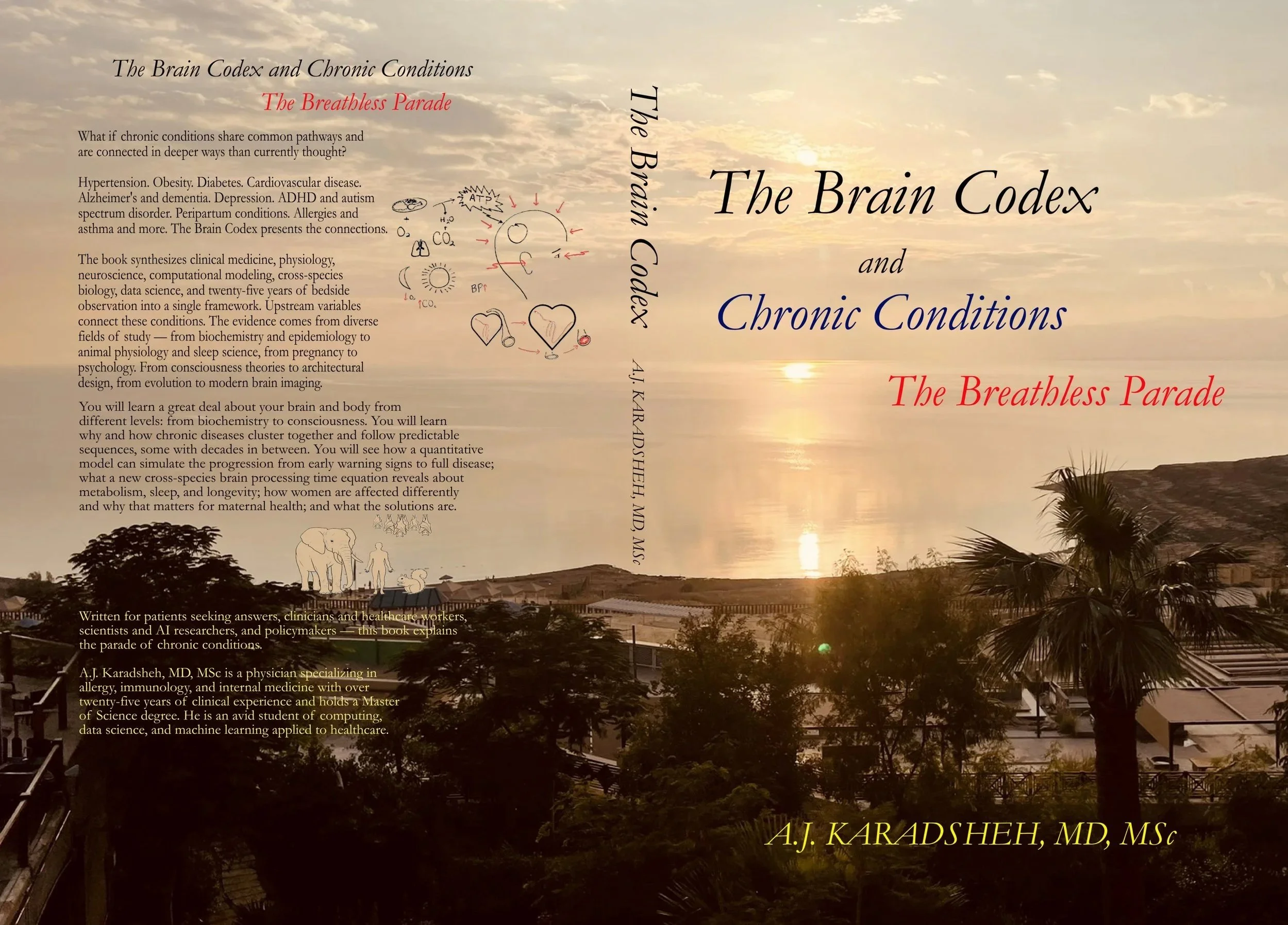
The Brain Codex and Chronic Conditions: The Breathless Parade
By Adli Karadsheh, MD, MS
Hypertension * Obesity * Diabetes * Hyperlipidemia * Chronic Kidney disease * Arthritis * Dementia * Alzheimer's * ADHD / Autism * Depression * Anxiety * Allergies * Asthma * Food Allergies * Autoimmune disorders * Fatty Liver * Preeclampsia * Postpartum depression * And More ...
Hundreds of Causes * One Framework * One Parade
*
Hypertension * Obesity * Diabetes * Hyperlipidemia * Chronic Kidney disease * Arthritis * Dementia * Alzheimer's * ADHD / Autism * Depression * Anxiety * Allergies * Asthma * Food Allergies * Autoimmune disorders * Fatty Liver * Preeclampsia * Postpartum depression * And More ... Hundreds of Causes * One Framework * One Parade *
Something Is Missing
Not a day goes by without an article explaining a new gene or treatment for a chronic condition. Social media is filled with advice and products promising to help with weight loss, high blood pressure, or sharpen your cognition. New guidelines “improving” their advice to the public and policy makers. Yet chronic conditions continue to rise. You may have one or more than one of them. You may have accepted the reasons why they started or you may be still looking for answers, better ones.
Chronic conditions are increasing worldwide. They cost us healthy years, quality of life, and trillions of dollars. They don’t arrive one at a time — they march together, each one making the next more likely.
The Scale of the Problem
Six in ten U.S. adults have at least one chronic condition. Four in ten have two or more. The annual U.S. healthcare spending exceeds $4.1 trillion, with the majority directed at chronic disease management. On a global scale, the costs multiply.
Could they be missing something?
Every new finding is reported in isolation. Every product targets a single symptom. But chronic conditions don’t exist in isolation. They are deeply interconnected, and until the full picture is understood, only fragments are being addressed instead of the whole person.
Many see something but have not connected the dots nor synthesized the pattern into a framework. This book does.
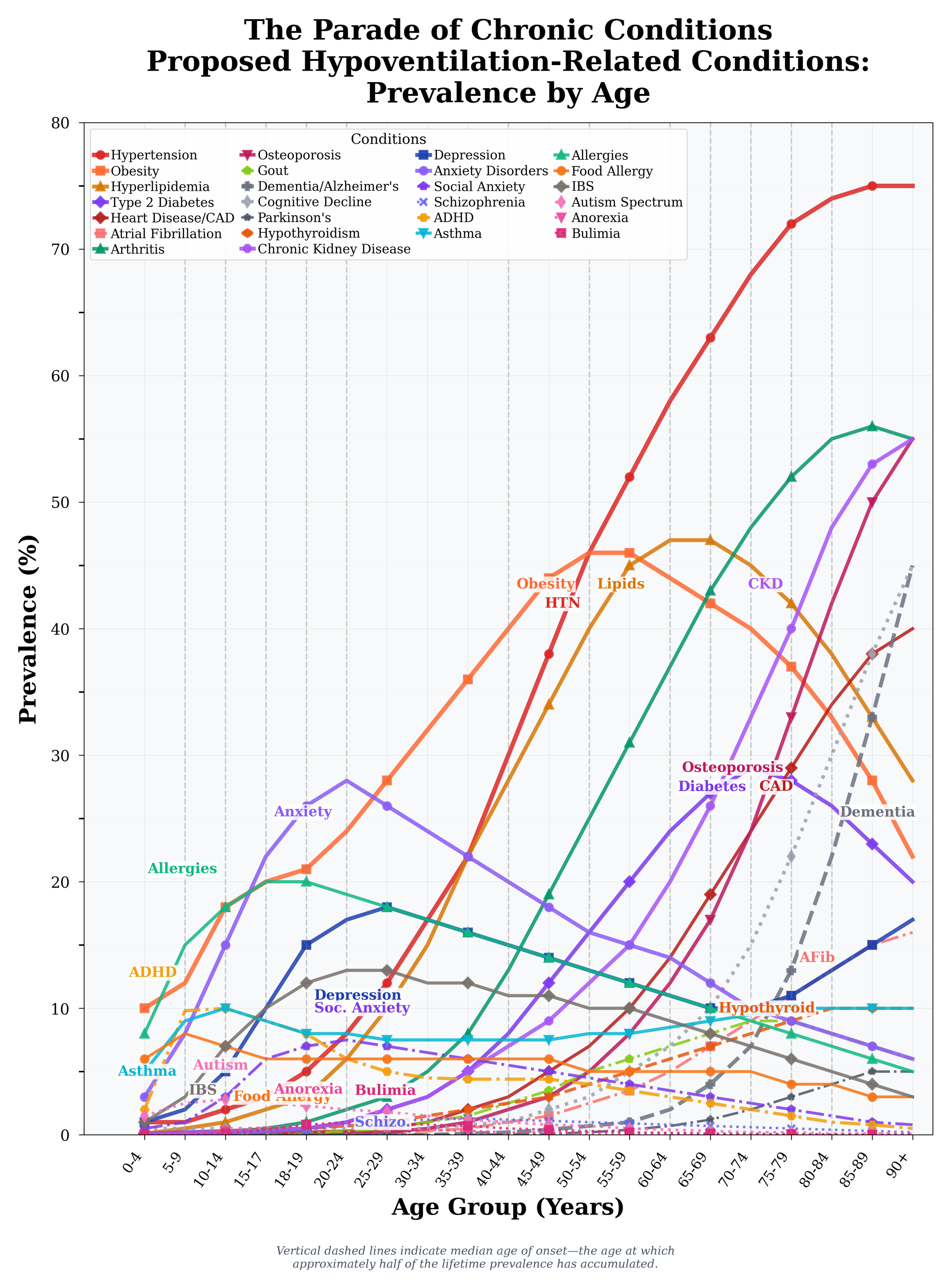
The Parade
Hundreds of causes. One framework. One parade.
Hypertension Obesity Diabetes Hyperlipidemia Chronic Kidney disease Arthritis Dementia Alzheimer's ADHD / Autism Depression Anxiety Allergies Asthma Food Allergies Autoimmune disorders Fatty Liver And More ...
The Framework: The Brain at the Center
For decades, chronic conditions have been studied and treated as separate entities — each with its own specialists, guidelines, and medications. The Brain Codex and Chronic Conditions presents a unifying framework that places the brain where it belongs: at the center.
The brain orchestrates every system in your body. When it is overloaded, under-resourced, or structurally compromised, the cascade of chronic conditions begins. This book synthesizes what the individual articles, media reports, and social media posts discuss in isolation — into one coherent picture.
It draws from the scientific literature across fields: neuroscience, endocrinology, cardiology, psychiatry, immunology, sleep medicine, biology, allometry and more — to show how these separate findings all point to the same upstream driver.

Solutions: Addressing the Common Pathway
Understanding the shared upstream drivers isn’t just an academic exercise — it opens the door to solutions. The Brain Codex offers practical approaches that address the many causes feeding into the common pathway, rather than treating each condition in isolation.
Prevention First: Intervene early by addressing root causes before conditions cascade and multiply. Before treatments cause the brain to circumvent by broadening its adaptations to the original deficits
Brain-Centered Care: Protect and support the brain’s processing capacity as the foundation of systemic health.
Practical Tools: Clinicians can assess brain load, processing demands and metabolic balance to guide personalized care.
Written to Be Understood
Complex science doesn’t have to be impenetrable. The Brain Codex and Chronic Conditions is presented in a way that anyone can engage with — no advanced degree required.
Clear, Simple Language: Written for readability, avoiding unnecessary jargon while maintaining scientific rigor.
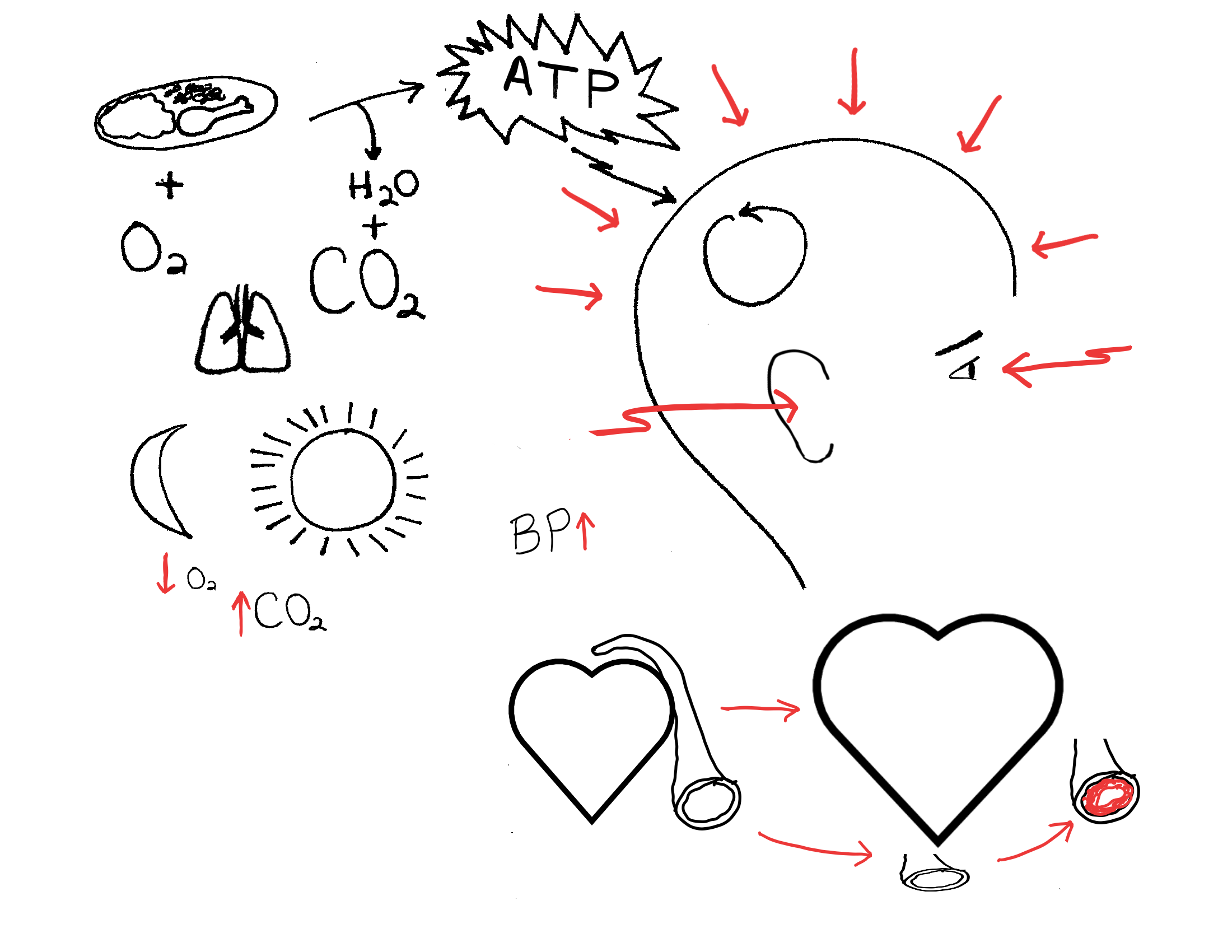
Original Drawings: Illustrations and diagrams that make complex relationships visual and intuitive.
Simulated Cases: Real-world scenarios that bring the science to life through recognizable patient stories.
From Molecules to the Psyche — and the Role of Faith
The Brain Codex and Chronic Conditions clarifies and simplifies understanding of chronic conditions across every level — from molecular pathways and cellular mechanisms, through organ systems and whole-body physiology, all the way to psychology and even the role of faith and spirituality in health.
Levels of Understanding
Molecular: Genes, proteins, signaling pathways, and metabolic cascades
Cellular: Inflammation, oxidative stress, mitochondrial function
Organ Systems: Heart, lungs, endocrine, immune, and nervous system interactions
Whole Person: Behavior, sleep, diet, physical activity, and stress
Psyche & Spirit: Mental health, cognition, purpose, and the role of faith
The Bulldog: A Living Example
The English bulldog exemplifies the breathless parade. Short-faced, labored breathing, and a body that develops nearly every metabolic and cardiovascular condition we see in humans — compressed into a few short years. The bulldog is a prime example of the connections this book reveals.
The Grand Model & Reverse Calculation
The computational model used in the book’s simulations advances several concepts that have not been described before. One of the most powerful is Reverse Calculation of deficits from the blood pressure numbers and the A1C.
Reverse Calculation: A Novel Approach
Traditional medicine measures blood pressure or A1C and asks: “what does this number mean?” The Grand Model flips the question. From your blood pressure reading or A1C value, the model estimates the deficits your body has — working backward to uncover what’s going wrong upstream. This ability is enabled with The Brain Codex and Chronic Conditions framework.
This reverse engineering approach is novel and provides clinicians and patients with a new lens for understanding what routine lab values are really telling us about the body’s deeper state.
Reverse Engineering Health: Estimate hidden deficits from common clinical measurements like blood pressure and A1C. Subject to further research, many of common laboratory values may be used to assess the health status of an individual. Stay tuned.
Computational Simulations: The Grand Model powers simulations that demonstrate how conditions develop and interact.
One More thing : A New Equation for the Brain
The Brain Codex and Chronic Conditions introduces an original equation that describes what the brain does with its time — night and day. Consciousness. No such equation existed before to explain fundamental questions we all ask:
What does the brain do with its time? Why do we sleep? Why approximately 8 hours? What is the brain busy with?
This equation is new — no prior formulation was found in the literature to answer these questions. Its extensions facilitate understanding your own mind and help clinicians assess the loads on the brain and the faculties it has to handle its processing demands.
Brain Processing Time: A quantitative framework for understanding how the brain allocates its most precious resource: time.
Clinical Applications: Helps clinicians, especially psychotherapists and psychiatrists assess processing loads and identify when the brain’s capacity is exceeded. The equation partitions information into manageable components that may be assessed with questionnaires and tied to metabolism and lifestyle.
Cross-Species Insight: The equation applies across species, offering a universal perspective on brain function and sleep.
Written for You
The Brain Codex speaks to a broad range of readers. Wherever you are in the healthcare landscape, this book meets you there.
A Health Conscious Person
Whether watching diet, taking supplements, or concerned about your future health, this book helps you learn and understand core health concepts and enables sharing and teaching to your family, loved ones and students
Patients
Living with hypertension, obesity, diabetes, ADHD, depression, or any chronic condition described in the book
Clinicians
Physicians, specialists, and primary care providers seeking a unifying lens for chronic disease
Healthcare Workers
Nurses, therapists, and care team members across all settings
Students
Medical, nursing, and health science students exploring chronic disease connections
Scientists / Researchers
Across neuroscience, endocrinology, cardiology, immunology, and many related fields. Much of data already collected may be re-analyzed in view of the new framework presented in The Brain Codex and Chronic Conditions
Policy Makers
Concerned about rising costs, epidemiologic trends, and prevention priorities. The framework ought to result in material improved health and health economics at scale
See the Full Picture
Chronic conditions are connected. The Brain Codex and Chronic Conditions shows you how — and what you can do about it.
See the Full Picture